

Which gases are analyzed in food packaging (MAP)?
Gas monitoring has become an essential part of quality control in the food industry. It ensures that the storage conditions specified during packaging are properly maintained and that the products will have the expected shelf life.
But which gases are analyzed in food packaging, and why are they so important?
To answer this question, we must first understand a packaging technique widely used today in the food industry: modified atmosphere packaging.
What is modified atmosphere packaging (MAP)?
Modified atmosphere packaging, also known as MAP (Modified Atmosphere Packaging), is a packaging technique that involves replacing the air naturally present in a package with a gas mixture tailored to the product.
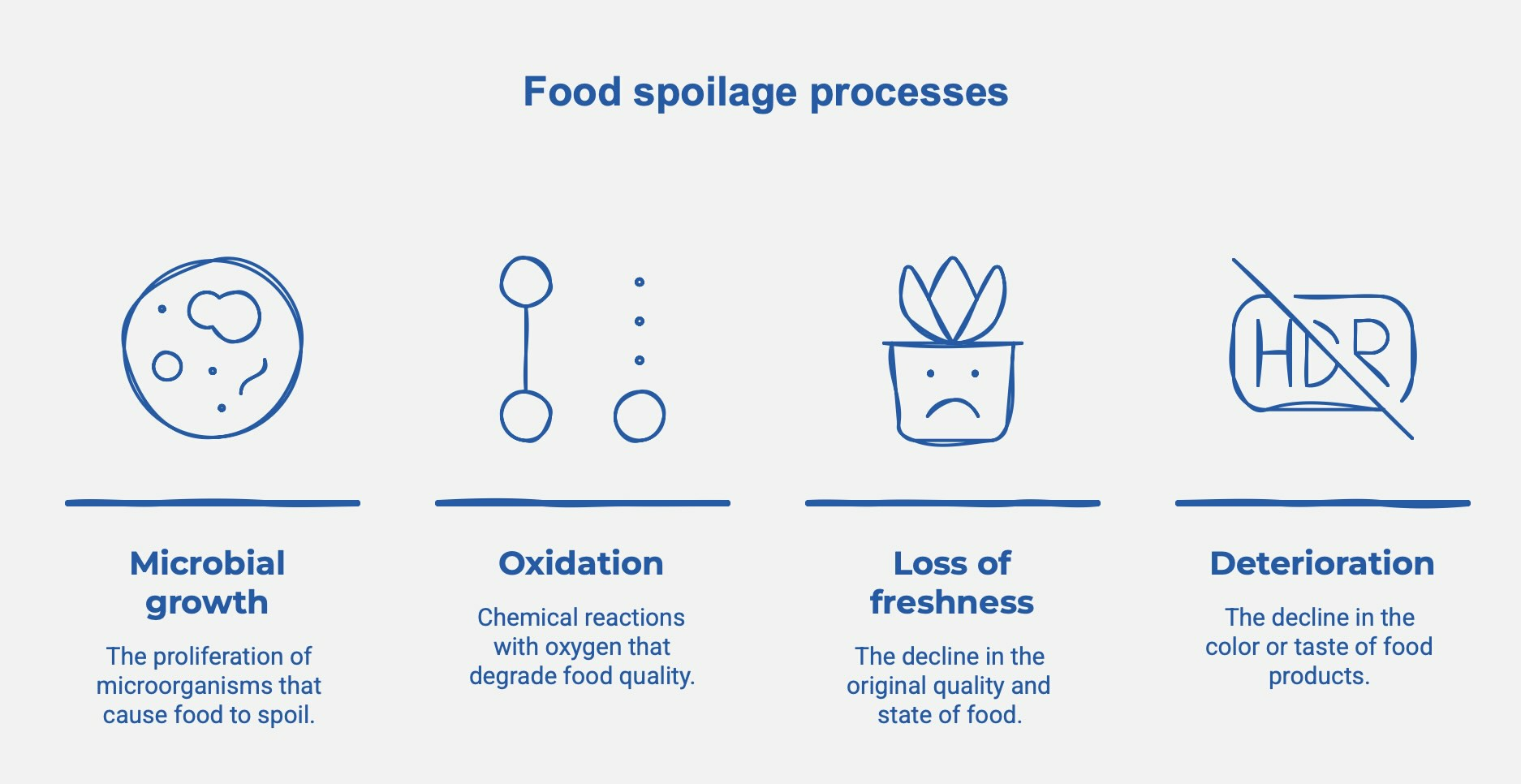
The goal is to slow down the processes responsible for food spoilage:
- microbial growth;
- oxidation;
- loss of freshness;
- deterioration of color or taste.
This technology is used for many food products, such as meat, fish, prepared meals, salads, and baked goods.
Since the quality of preservation depends directly on this gas mixture, manufacturers regularly conduct tests to verify that the intended concentrations are present in the packaging.
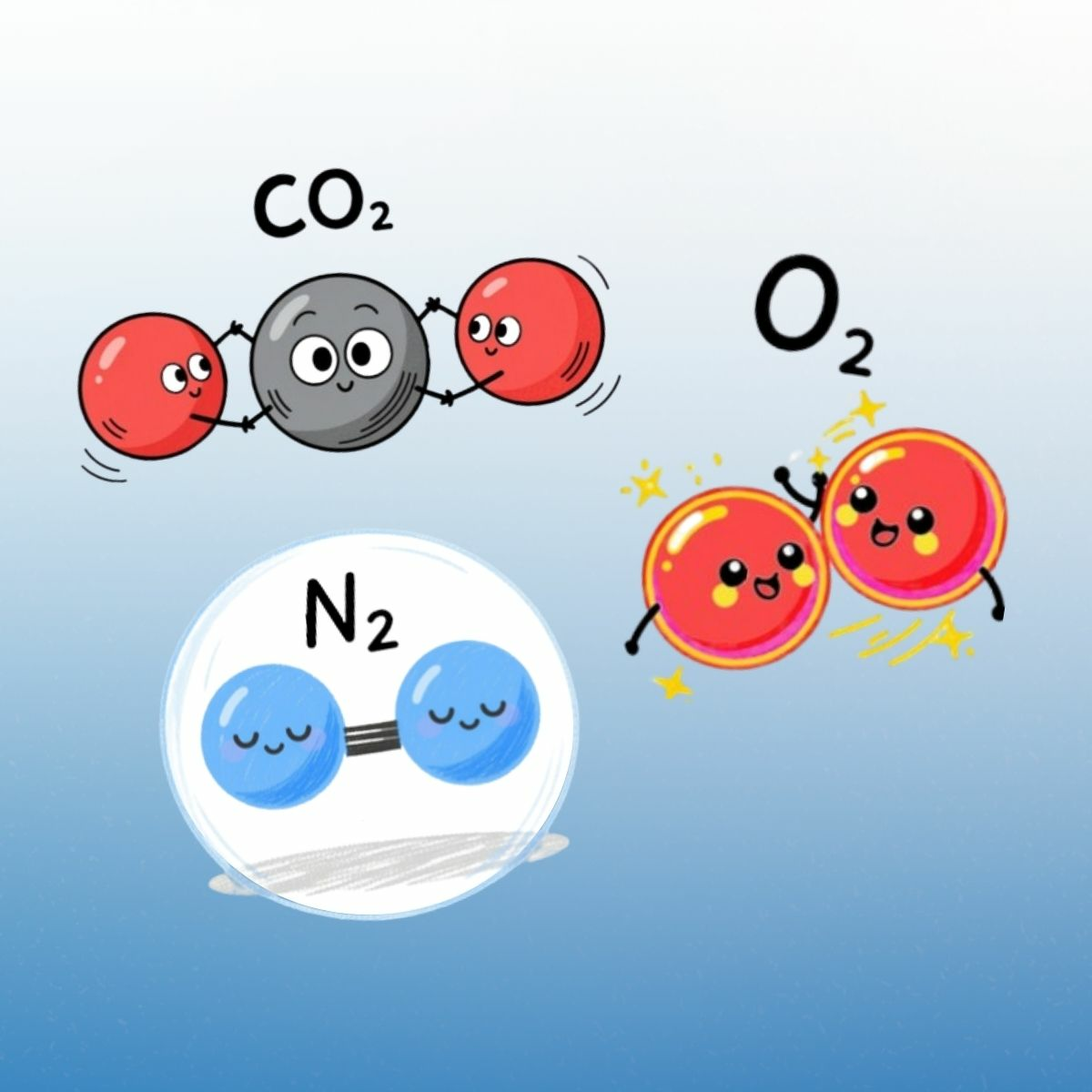
Oxygen (O₂): The most closely monitored gas
Oxygen is often the number one enemy of food preservation.
Excessively high concentrations can contribute to:
- the oxidation of fats;
- color loss in certain products;
- the growth of aerobic microorganisms;
- a shorter shelf life.
For this reason, oxygen levels are routinely monitored in many modified-atmosphere packaging applications.
Carbon Dioxide (CO₂): An ally in preservation
CO₂ is commonly used in food packaging because it inhibits the growth of many microorganisms.
It is particularly prevalent in packaging for:
- fresh meat;
- bakery products;
- prepared meals;
- dairy products.
Accurately measuring its concentration ensures that the injected gas mixture complies with the specified formula.
Nitrogen (N₂): The filling gas
Nitrogen is an inert gas widely used in MAP.
Its main role is to:
- replace oxygen;
- limit oxidation;
- maintain the shape of the package;
- protect fragile products from being crushed.
Unlike oxygen and CO₂, it is not always measured directly. Its concentration is often deduced from the other gases analyzed.
Why monitor these gases?
Gas monitoring is not only used to verify that the packaging machine is operating properly.
It also makes it possible to:
- ensure packaging compliance;
- guarantee the stated shelf life;
- detect potential production deviations;
- reduce the risk of non-compliance during quality audits.
Reliable measurement is therefore an essential component of quality control in the food industry.
The importance of supplementing the analysis with a leak test
Even with a perfectly calibrated gas mixture, a leaking package will quickly lose its protective atmosphere.
This is why many companies today combine gas analysis with a leak test on the packaging. The combination of these two checks provides a more comprehensive view of the actual quality of the packaging.
Conclusion
Oxygen, carbon dioxide, and nitrogen are the main gases monitored in food packaging. Analyzing them ensures that the intended protective atmosphere is present and that storage conditions meet quality requirements.
Download our White Paper 2026 – Gas Analysis to learn more about this topic