

How to control a network of medical fluids?
In healthcare facilities, medical fluid networks play an essential role in patient care. Medical oxygen, medical air, vacuum, nitrous oxide or carbon dioxide must be routed to the wall outlets with a high level of reliability.
A connection error, an identification defect or a pressure anomaly can lead to significant consequences. That is why the checks carried out during installation, maintenance or periodic inspections are essential.
Why analyze medical fluid networks?
Medical fluid networks must allow caregivers to access the right fluid, on the right wall outlet and at the right pressure.
The checks have several objectives:
- Check the nature of the fluid dispensed
- Control the oxygen concentration
- Measure the available pressure
- Detect a possible misconnection
- Validate the compliance of a new installation
- Carry out preventive maintenance operations
These audits are particularly important in:
- Hospitals
- The clinics
- The rehabilitation centers
- Medical facilities
- The operating rooms
- Intensive care services
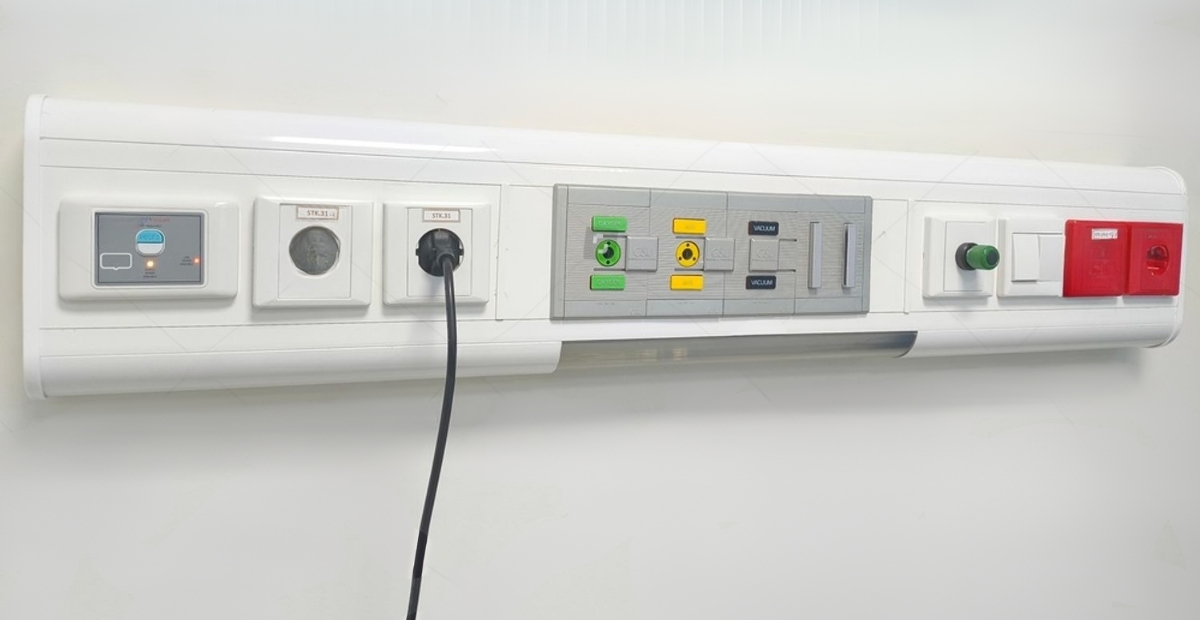
Which gases are generally controlled?
Depending on the type of installation, several fluids may be affected:
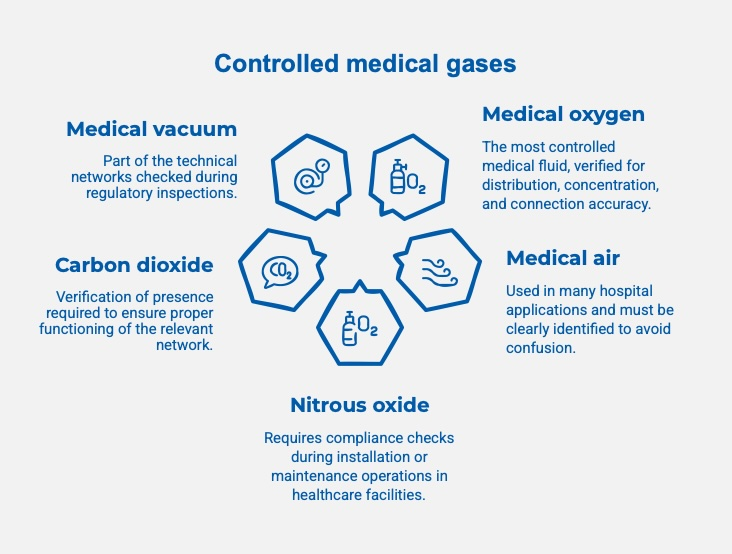
Medical oxygen (O₂): Oxygen is the most controlled medical fluid. The analysis notably allows you to verify:
- That the wall outlet does distribute oxygen
- That the concentration is compliant
- That there is no connection error
Medical air: Medical air is used in many hospital applications and must be clearly identified to avoid confusion with other fluids.
Nitrous oxide (N₂O): Present in some healthcare facilities, it also requires compliance checks during installation or maintenance operations.
Carbon dioxide (CO₂): Some medical applications may require verification of the presence of CO₂ to ensure the proper functioning of the relevant network.
Medical vacuum systems: Vacuum is also part of the technical networks checked during regulatory inspections.
What characteristics should be looked for in a medical fluid analyzer?
Not all gas analyzers are suitable for controlling hospital networks.
A dedicated device should generally offer:
Quick identification of the fluid: The technician must be able to confirm immediately that he is connected to the correct wall outlet.
A reliable measurement of oxygen: The concentration of O₂ is often one of the main controlled criteria during interventions.
A pressure measurement: The available pressure is essential information for validating the proper functioning of the network.
Portable use: Inspection operations are generally carried out directly on site, sometimes on several dozen wall sockets. The mobility of the instrument is therefore an important advantage.
Compliance with regulatory requirements: Interventions on medical fluid networks must comply with specific normative procedures. The measuring equipment used must therefore be adapted to this environment.
Control of medical fluids: laboratory or field?
Unlike some laboratory analyses, inspections of medical networks take place directly in buildings.
Technicians often need to:
- Circulating in different departments
- Intervene in rooms
- Carry out checks in the operating rooms
- Check a large number of takes successively
Ease of use and speed of measurements then become essential criteria.
Mercury® 2024: the Anéolia solution for controlling medical fluid networks
To meet the needs of installers, maintainers and operators of medical fluid networks, Anéolia offers the Mercury® 2024, an analyzer specially designed for monitoring wall outlets and gas networks in medical environments. It allows to check the oxygen concentration, the pressure of the network and optionally to detect CO₂.
Compliant with the NF EN ISO 7396-1 standard, Mercury® is used for receiving, maintaining, and controlling medical fluid systems in hospitals, clinics, rehabilitation centers, and other healthcare facilities.
This 2024 version features an O₂ sensor, which is reported to be five times faster than previous generations of Abiss hardware, allowing technicians to carry out their inspections more efficiently in the field. The device is also portable, battery-powered and delivered in a transport case to facilitate on-site interventions.
👉 To learn more about the 2024 Mercury®