

Why is speed crucial for quality control in the food industry?
In the food and drink industry, a factory’s performance depends on a delicate balance between two requirements that are often seen as conflicting: maintaining maximum production rates and ensuring impeccable food safety standards. On modern packaging lines, every second counts.
If a production or quality manager is looking to optimise their measurement tools, speed of operation must be a key selection criterion. Here’s why.
1. Avoiding bottlenecks on high-speed lines
Whether dealing with fresh produce, ready meals, meat or bakery products, modern sealing and bagging machines operate on a just-in-time basis. If a measuring instrument is too slow to provide its result (gas analysis or leak test), two problematic scenarios arise: A fast tool therefore enables a high production rate to be maintained whilst tightening the control net.
- Either the inspection creates a physical bottleneck on the line, slowing down the workshop’s overall output.
- Or teams are forced to space out sampling intervals (for example, a test every hour instead of every 15 minutes), increasing the risk of a defect slipping through.
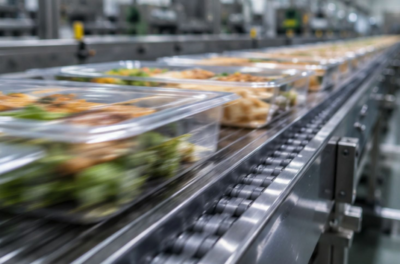
Speed and quality control
2. Reducing handling time through simultaneous testing
Traditionally, verifying the integrity of modified atmosphere packaging (MAP) involves two distinct steps: analysing the composition of the residual gas (O₂ / CO₂) on the one hand, and testing for leaks on the other. Increasing the number of handling steps means increasing the precious time spent on each sample.
Modern industrial performance demands instruments capable of combining these technologies. Obtaining two critical data points in a single step allows the tested product to be released immediately and reduces the burden on operators.
3. Gaining agility through portability
Time is also lost in travel. A fixed or overly heavy measuring instrument forces operators to make repeated trips between the production line and the laboratory. To optimise inspection time, the equipment must go to the product, not the other way round. A lightweight, mobile tool that is instantly operational (with no warm-up time or endless configuration) saves precious minutes over the course of a working day.
4. Immediately halt sealing defects
The faster the diagnosis, the sooner corrective action can be taken. If a sealing bar begins to weaken or a gas injector malfunctions, every minute of delay results in tens or hundreds of defective packages. Ultra-fast detection enables technical teams to intervene in real time, thereby preventing the scrapping of entire batches of perishable foodstuffs and the associated financial losses.
Faced with such constraints in terms of time, precision and logistics, a question arises: which measuring instrument currently available on the market could meet all these requirements?
Anéolia’s solution: the elyos®
It is precisely to address all these industrial challenges that Anéolia has developed the elyos®. This latest-generation portable instrument has been designed as a practical solution to the food industry’s need for speed:
- It keeps pace with your production rates: Thanks to its optimised sensors, it delivers reliable results in record time.
- It combines ‘Gas + Leak’ testing: It carries out gas analysis and leak testing simultaneously, in a single sample. This halves the number of steps required.
- It is ultra-portable: Lightweight and featuring an intuitive interface, it can be moved from one production line to another without wasting time.
- It safeguards your use-by dates: By issuing an immediate alert in the event of any deviation, it protects your products and your brand at the same pace as your production.
find out more about the Elyos: click here